
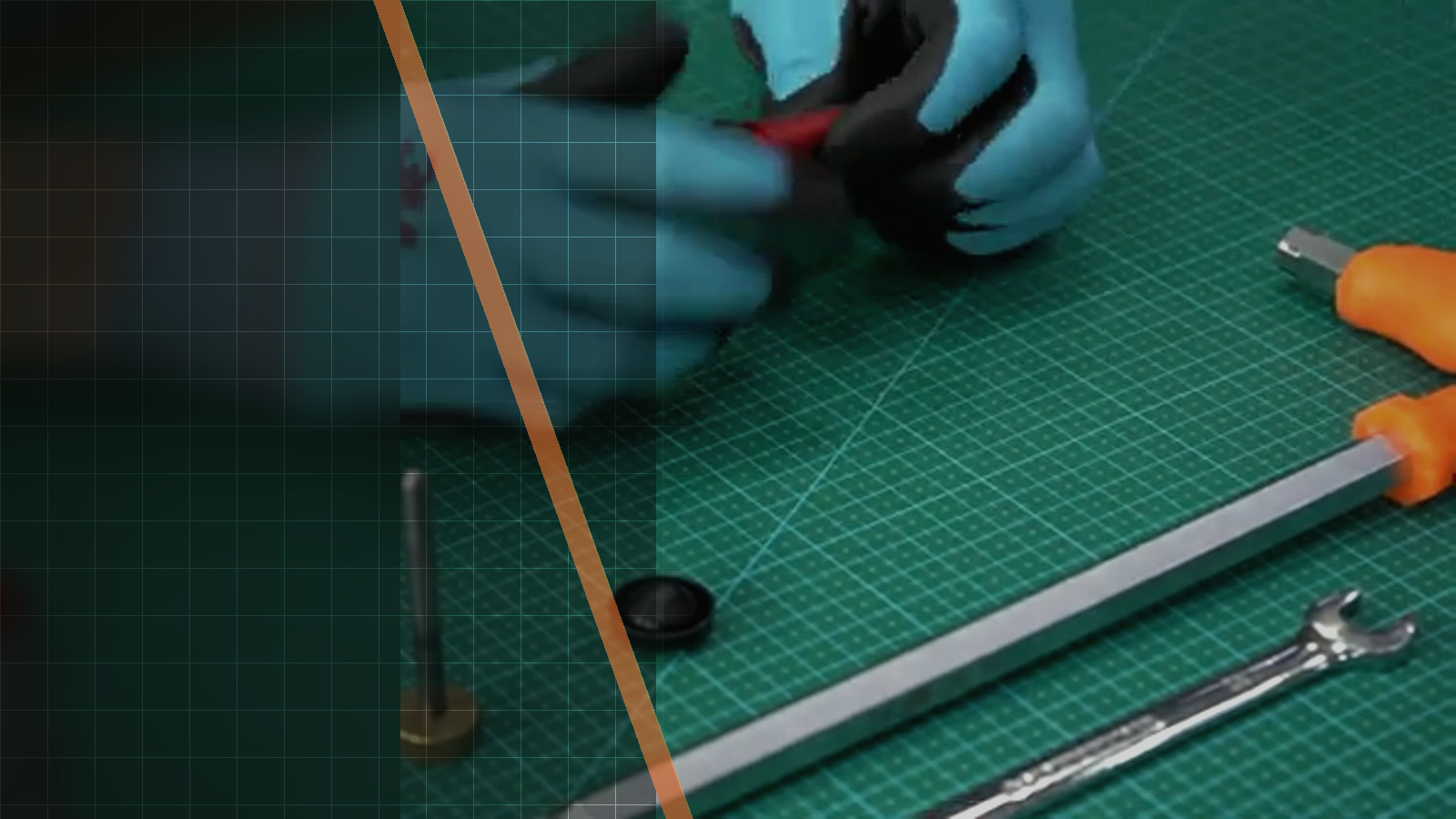
Official Silverback video workshop
Silverback TAC-41 GBB Hopup Rubber Swap Guide
This official Silverback video demonstrates how the GBB hopup rubber, socket and inner barrel are arranged in the TAC-41 hopup body, then shows the greasing and reassembly sequence. Use this guide when comparing the five key video checkpoints during a rubber swap, especially when checking barrel retention, the feeding mechanism, hopup alignment and the final adjustment-wheel position.

01Source-based overview
What this procedure does
The footage follows the GBB rubber, socket and barrel inside the hopup body. The barrel is retained either with its clip or with three M3x6 screws, and the video specifically warns that overtightening can damage the inner barrel; inability to remove the alignment pin indicates excessive tightening. PTFE grease is then applied to the inner barrel and barrel-spacer assembly before the parts are brought back together.
During reassembly, the feeding mechanism is engaged, the hopup is aligned with the outer barrel, and the adjustment wheel is set between 0 and 1 before tightening. The official description identifies the SBA-HOP-31 as a GBB hopup unit for TAC-41, compatible with GBB hopup rubbers and GBB inner barrels. It also specifies 0.75 mm of TDC nub travel across 50 positions and lists the required GBB inner-barrel lengths for 510, 420 and 330 mm outer barrels.
Tools and parts explicitly identified
- PTFE grease
- GBB hopup rubber
- hopup rubber socket
- GBB inner barrel
- hopup body
- barrel clip
- M3x6 screws
- alignment pin
- barrel-spacer assembly
- feeding mechanism
- outer barrel
- adjustment wheel
Evidence standard
Every technical statement below is restricted to the official Silverback description, subtitles, on-screen text or visible action. Unstated torque values and compatibility claims are intentionally omitted.
What the footage makes clear
This walkthrough stays close to the official Silverback source. The expanded notes explain what is visible at each checkpoint, while measurements, compatibility and cautions remain limited to what Silverback actually states.
- The five checkpoints and the visible sequence are based on the visual review observations from the official video.
- Unit contents, compatibility, barrel-length requirements and TDC specifications are taken from the official video description.
- No official or automatic English or French subtitle track was available.
| Specification | Source value |
|---|---|
| Hopup unit | SBA-HOP-31, "GBB" hopup unit for TAC-41 |
| Hopup rubber | HOP-316001 60° flat hopup rubber, “GBB” type |
| TDC nub travel | 0.75 mm nub travel amplitude |
| Adjustment positions | 50 positions (15 µm per clic) |
| Hopup compatibility | compatible with “GBB” hopup rubbers and “GBB” inner barrels |
| 510 outer barrel | requires a 507 mm GBB inner barrel |
| 420 outer barrel | requires a 417 mm GBB inner barrel |
| 330 outer barrel | requires a 327 mm GBB inner barrel |
| Advanced kit compatibility | compatible with the advance hopup kit (SBA-HOP-34) |
02Primary source
Watch the official Silverback tutorial
Every technical statement below is restricted to the official Silverback description, subtitles, on-screen text or visible action. Unstated torque values and compatibility claims are intentionally omitted.
03Procedure
Silverback TAC-41 GBB Hopup Rubber Swap Guide, step by step


- Do not overtighten the three M3x6 screws because this can damage the inner barrel.
- If the alignment pin cannot be removed, the screws have been tightened excessively.
- Changing the hopup rubber will affect the muzzle energy of the airsoft gun; users should obey the laws regarding ownership of airsoft guns in their country.
- The GBB rubber, socket and barrel are aligned and secured in the hop-up body.
- The barrel is retained by its clip or by three M3x6 screws.
- The feeding mechanism is engaged during reassembly.
- The hop-up is aligned with the outer barrel.
- The adjustment wheel is between 0 and 1 before tightening.
04FAQ
TAC-41 tutorial questions
Which hopup rubbers and inner barrels are compatible with this unit?
The SBA-HOP-31 is compatible with “GBB” hopup rubbers and “GBB” inner barrels. The listed rubber is the HOP-316001 60° flat hopup rubber, “GBB” type.
Which GBB inner-barrel lengths are specified for the listed outer barrels?
A 510 mm outer barrel requires a 507 mm GBB inner barrel, a 420 mm outer barrel requires a 417 mm GBB inner barrel, and a 330 mm outer barrel requires a 327 mm GBB inner barrel.
How much adjustment does the TDC hopup provide?
The official description specifies 0.75 mm of nub travel amplitude divided across 50 positions, with 15 µm per click.
Share:
Silverback TAC-41 Advanced Hop-Up Kit Installation Guide
Silverback TAC-41 Long Front Rail Installation Guide